3D Night Sky Paper Cutting for 3D SVG Shadow Boxes
When evaluating a new graphic design asset for a client project, my first criterion is always versatility combined with technical integrity. Recently, while developing a visual identity and packaging suite for a boutique candle brand launching a "Midnight Solstice" collection, I tested the 3D Night Sky, Paper Cutting asset. The initial impression was striking; it successfully captures the tactile warmth of traditional craftsmanship while offering the scalability required for modern commercial design. Unlike flat vector illustrations that can sometimes feel sterile, this layered papercut style introduces immediate depth and shadow, creating an emotional connection that aligns perfectly with handmade businesses and artisanal branding.
The asset evokes a sense of wonder and nostalgia. It does not merely depict a night sky; it simulates the physical experience of looking through a window or a diorama. For designers working in creative design, this distinction is vital. We are not just placing clipart; we are curating a mood. This specific paper cut template for crafts bridges the gap between digital efficiency and analog texture, making it an excellent candidate for brands that need to communicate authenticity without sacrificing production speed.
Elevating Brand Identity and Packaging Narratives
In the context of the candle brand project, the 3D Night Sky, Paper Cutting served as more than just decoration; it became a structural element of the brand identity. When applied to packaging design, specifically box sleeves and jar labels, the layered aesthetic suggested premium quality. The interplay of light and dark inherent in the design mimics the actual product experience—a flame in the darkness. This creates a cohesive narrative across marketing visuals.
For print-on-demand sellers and Etsy shop owners, this asset performs exceptionally well on merchandise. During testing, I found the intricate details held up beautifully on t-shirt design and tote bags, provided the print method supports high detail. As a sublimation design, the vibrant colors of the raster layers translate effectively onto polyester substrates. However, its true power lies in physical fabrication. As a 3D SVG intended for shadow boxes, the file structure allows for precise laser cutting or Cricut assembly. The separation of layers means a crafter can physically stack paper to recreate the digital depth, turning a digital product into a tangible art piece.
Digital Applications: Social Media and Web Graphics
Beyond physical goods, this asset is a robust tool for social media graphics and web design. In a saturated creative marketplace, stopping the scroll requires visual interest. Using the PNG design files as hero images for website banners or Pinterest pins adds a rich texture that flat photography often lacks. For content creators and bloggers, it serves as an engaging header for articles related to astronomy, mindfulness, winter holidays, or fairy tales.
I also tested this within a Canva template workflow. Because the asset includes separated raster layers, it integrates smoothly for non-designers who need to adjust opacity or rearrange elements for Instagram stories. This flexibility makes it a valuable addition to any design bundle aimed at small business owners who manage their own visual hierarchy and content creation.
Strategic Placement: Where the Asset Shines
Understanding where to deploy a design asset is as important as the asset itself. The 3D Night Sky, Paper Cutting excels in large layout areas where its complexity can be appreciated. It is ideal for:
- Product Mockups: Adding atmospheric context to cosmetic or home decor renders.
- Editorial Design: Serving as full-bleed backgrounds for magazine spreads or book covers.
- Event Stationery: Wedding invitations or gala programs requiring a celestial theme.
- Cricut Projects: Intricate card making and physical shadow box assembly.
- Sticker Design: Die-cut vinyl stickers where the layered look implies dimension.
In these scenarios, the asset acts as a primary focal point. The "night sky with shining stars papercut" motif provides enough visual weight to anchor a composition without needing excessive additional typography or graphics.
Navigating Visual Hierarchy and Readability Constraints
However, professional judgment requires acknowledging limitations. This asset demands careful handling in specific contexts. Due to its intricate nature and simulated shadows, it struggles in small sizes. On a business card or a tiny icon, the fine details of the paper cut may muddy together, reducing legibility and perceived quality. Similarly, in minimalist corporate branding or strict B2B environments, the whimsical, storybook aesthetic might clash with a need for sterile professionalism.
Designers must also be vigilant regarding contrast. If placing text over this illustration, ensure there is sufficient negative space or use a solid overlay. The busy texture of the stars and paper layers can destroy readability if typography is not treated with care. Always prioritize visual hierarchy; if the background competes with the headline, the communication fails. Furthermore, avoid using this on already complex photographic backgrounds. It needs breathing room to maintain its 3D illusion.
Technical Due Diligence for Commercial Use
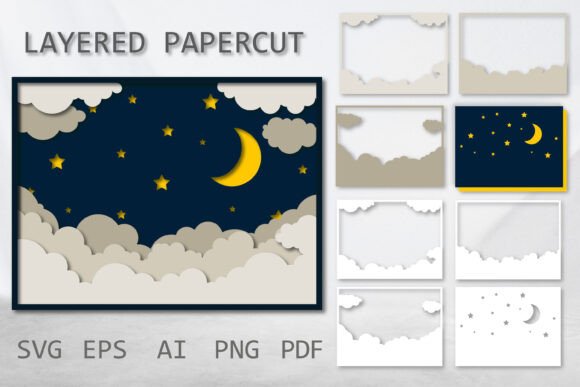
Before committing this asset to a final client deliverable, rigorous technical testing is non-negotiable. The zip folder contains EPS-10, AI, and PNG files (5 colored raster layers and 4 white raster layers). Here is my checklist for ensuring professional results:
- Verify Vector Editability: Open the AI and EPS files to confirm paths are clean. If you need to recolor the sky for brand consistency, ensure the vectors are not merely embedded rasters.
- Check Transparency: Inspect the PNG layers for clean edges. Jagged pixelation around the paper cuts will look unprofessional in print.
- Contrast Testing: View the design in grayscale. If the layers disappear or blend into a flat gray mass, the 3D effect relies too heavily on color rather than value. Adjust brightness/contrast if necessary.
- Typography Pairing: Test against various fonts. A delicate serif font complements the papercut elegance, while a bold sans-serif provides modern contrast. Avoid overly ornate script fonts that compete with the intricate star details.
- Print Proofing: Always print a physical proof at actual size. Screen resolution often masks issues that become glaring on paper, especially regarding the alignment of the white spacer layers versus colored layers.
- Licensing Confirmation: Review the commercial license terms explicitly. Ensure your intended use (e.g., POD vs. client branding) is covered to protect both yourself and the client.
Final Verdict for Professional Designers
The 3D Night Sky, Paper Cutting is a sophisticated addition to a designer’s toolkit, particularly for projects demanding warmth, texture, and narrative depth. It transcends basic clipart by offering a structured, layered system that supports both digital and physical fabrication. For small business branding, seasonal campaigns, and immersive packaging, it delivers high perceived value.
However, it is not a universal solution. Its success depends entirely on respectful application—allowing it space to breathe, ensuring technical precision in production, and aligning its whimsical tone with the appropriate audience. When used with intention and technical diligence, this SVG design transforms from a simple download into a cornerstone of compelling modern design work. For the right client, it is exactly the kind of asset that elevates a project from functional to memorable.