3D Sea Fish Shadow Box SVG: An Embroidery Review
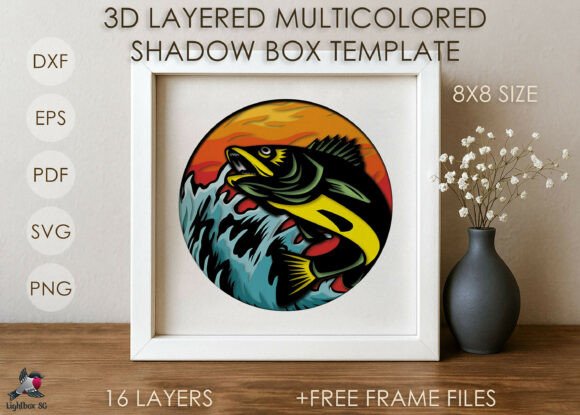
As a designer who constantly bridges the gap between digital assets and tangible textiles, I approach every new file with a specific question: will this actually stitch out beautifully, or is it just a pretty screen image? When I first opened the 3D Sea Fish Shadow Box SVG Template, my immediate thought was not about paper cutting, but about layering. While this product is marketed as a digital file for 3D paper cut shadow boxes, an experienced embroidery digitizer sees something else entirely. I see a roadmap for a multi-layered applique design or a structured machine embroidery design that mimics depth through fabric rather than cardstock.
In my studio, we are currently preparing a line of coastal-themed nursery decor and personalized gifts for an upcoming summer collection. We needed a motif that felt organic and dimensional without relying on heavy, dense stitching that distorts lightweight fabrics. Evaluating the 3D Sea Fish Shadow Box SVG Template through the lens of textile production reveals both unique opportunities and necessary technical cautions for anyone looking to adapt this asset for embroidery projects.
Translating Paper Layers to Fabric Texture
The visual personality of this template is defined by its stratification. In a paper shadow box, depth is achieved through physical spacing. In embroidery, we must achieve that same perception of depth through stitch density, thread colors, and fabric texture. The organic curves of the sea fish and the surrounding aquatic elements in this SVG provide excellent guide lines for creating a sense of movement.
For a recent custom apparel project involving a lightweight linen tote bag, I utilized the silhouette logic of this template. Instead of treating it as a single flat image, I broke the design down into zones. The background water elements became ideal candidates for a light running stitch or a textured fill stitch to simulate waves, while the fish itself demanded a smoother satin stitch border to define its shape against the linen. This adaptation turns a static 3D SVG concept into a dynamic embroidered patch aesthetic that feels high-end and handmade.
However, because this originates as a shadow box template, the lines are optimized for laser cutters or craft knives, not needles. You will likely need to smooth out jagged vector points before digitizing. A blade can handle sharp corners; a needle cannot. Softening these transitions is crucial for maintaining stitching clarity and preventing thread breaks during production.
Real-World Application: Nursery Decor and Apparel
I tested the viability of this design structure on two distinct items: a baby onesie and a decorative pillow cover. These represent opposite ends of the embroidery spectrum regarding stability and use case.
For the baby embroidery project, the open, airy nature of the sea fish design was a major advantage. Dense, heavy designs can make infant garments stiff and uncomfortable. By following the layered guides of the 3D Sea Fish Shadow Box SVG Template, I created a design that relied more on negative space and strategic placement than on solid coverage. The result was a soft, flexible finish that parents appreciate. It worked exceptionally well as a centerpiece for a personalized gift set, proving that complex-looking designs don't always require massive stitch counts.
Conversely, the pillow cover allowed for more experimentation with mixed media. Here, I could lean into the "shadow box" origin by actually using fabric layers. I cut the fish shapes from contrasting cottons using the SVG as a cutting file, then secured them with a narrow satin stitch. This hybrid approach—combining the precision of a digital embroidery file with the tactile reality of raw-edge applique—creates a boutique product feel that commands a higher price point than standard flat embroidery.
Technical Cautions for Makers and Sellers
While the aesthetic potential is high, practical execution requires vigilance. Because this template was designed for rigid paper, it does not account for fabric stretch or stabilizer limitations. If you attempt to stitch this design directly onto stretchy knit fabric without proper support, the registration will fail, and the "3D" effect will collapse into a puckered mess.
You must be particularly careful with hoop size selection. The intricate details meant for paper layering can become too small for thread when scaled down. Always verify that internal details remain legible at your intended size. If the gaps between the "layers" of the fish are narrower than 2mm, consider merging those sections or converting them to simple running stitches. Tiny lettering or minute decorative accents present in shadow box templates often disappear in embroidery unless significantly modified.
Fabric texture also plays a massive role. On smooth cotton or linen, the adapted design shines. On terry cloth towels or fleece blankets, the fine lines inspired by paper cuts may get lost in the pile. For these textured surfaces, you would need to increase the stitch width and simplify the layering effect to ensure the design reads clearly from a distance.
Elevating Product Value and Brand Consistency
For Etsy sellers and small shop owners, the way you present this design matters as much as the stitching itself. The 3D Sea Fish Shadow Box SVG Template lends itself beautifully to printable mockups because of its inherent depth. Even if you are selling the finished embroidered product, using the original SVG layers to create a digital preview helps customers visualize the dimensionality before they buy.
This design asset supports strong brand consistency for coastal or nursery niches. It avoids the generic, clip-art look that plagues many commercial embroidery listings. By adapting a specialized paper craft template, your work gains a unique architectural quality. Customers recognize this effort; they can tell the difference between a stock digitization and a thoughtfully constructed textile piece. This distinction builds trust and justifies premium pricing for custom apparel and holiday embroidery collections.
Essential Designer Notes Before You Stitch
If you plan to integrate this template into your workflow, treat it as a blueprint rather than a final pattern. My professional recommendation is to follow this checklist:
- Test on Scrap Fabric First: Never run this design on a final product without a test sew-out. The transition from paper logic to thread logic requires validation.
- Check Licensing Thoroughly: This listing describes digital files for shadow boxes. Confirm explicitly whether the license permits derivative works like machine embroidery designs or commercial sale of finished stitched goods.
- Evaluate Stabilizer Needs: Due to the potential complexity of layering, use a high-quality cut-away stabilizer for knits and a tear-away for wovens to maintain the structural integrity of the design.
- Review Stitch Density: Ensure that overlapping layers do not create bulletproof areas. Reduce density in underlying layers if you are building up fabric-on-fabric dimension.
- Mockup in Black and White: Before selecting thread colors, view the digitized version in grayscale. This ensures the contrast relies on value and texture, not just color, which is essential for professional-grade results.
- Confirm File Compatibility: As this is originally an SVG for cutting, ensure you have the software necessary to convert or trace it into a format your embroidery machine accepts, such as DST, PES, or JEF.
The 3D Sea Fish Shadow Box SVG Template is a fascinating starting point for textile artists willing to do a little translation work. It challenges us to think about depth differently, moving beyond standard fills and satins into a realm where fabric construction meets digital precision. For the maker who values uniqueness and is comfortable with technical adaptation, this asset offers a pathway to truly distinctive handmade products that stand out in a crowded marketplace. Just remember: respect the differences between paper and thread, and your finished product will be nothing short of spectacular.